Ecology, Climate Change & Biodiversity
SUSTAINABILITY SUMMER SCHOOL & SEMESTER PROGRAMS IN SICILY
Program Highlights
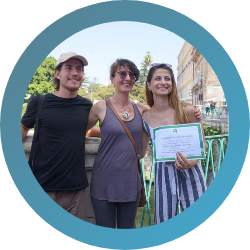
Earn an Academic Transcript for your Study Abroad experience in Italy:
all programs are jointly designed with the University of Minnesota (#2 in the world for Ecology rankings)
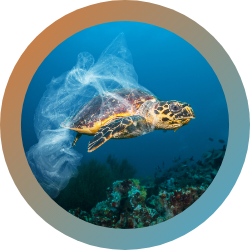
Join conservation efforts for the WWF Sicily Marine Turtle project and Marine Protected Area ecosystems

Embark on dolphin and whale monitoring with MareCamp NGO
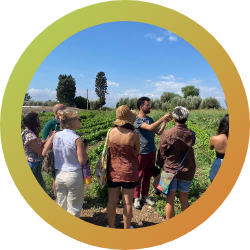
Learn sustainability practices from experts and meet environmental social justice activists, such as the Libera Terra antimafia NGO
Course Selection
Students can choose to enroll in the track-specific courses below.
Program Dates 2027:
- A) Spring Semester
January 22nd to April 30th: 14 weeks in Sicily
Program Requirements:
Programs are open to students who fulfill the following requirements:
– University transcript: the program is exclusively open to current or recent graduates (within 12 months of graduation)
– Passport/ID scan
– Letter of motivation
– English language certificate: C1 level (non-native English speakers)
Students may also select additional courses from the full course list to combine with the track-specific courses. The number of courses that each student can enroll in is based on their term of study (Summer I = 1 course, Summer II = 1 courses, Summer 3 = 2 courses, Fall/Spring Semester = 4-5 courses).
Marine & Coastal Ecology
Term: Summer Session II (6 weeks), Fall, Spring
Course code: SCLY3207 (University of Minnesota)
Contact Hours: 60
Program Highlights & Experiential Learning:
- Snorkeling field trip, sampling, and analysis activities at the Plemmirio Marine Protected Area (MPA) and its laboratories.
- Visit to the traditional fish market, including interviews with the local fishing community.
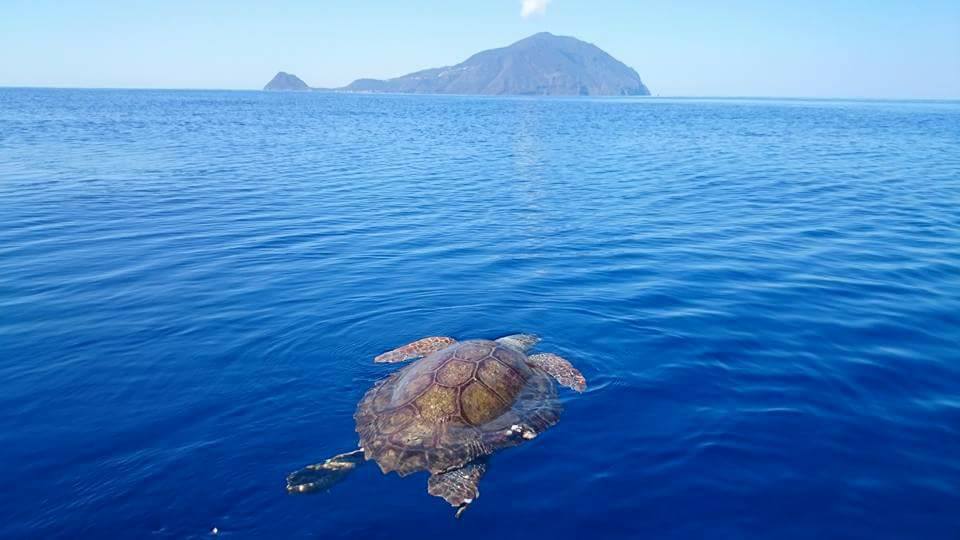
- Marine turtle nest monitoring activities with WWF Sicily experts.
- Coastal patrolling activities with MPA staff and environmental NGO partners.
- Sorting and analysis of samples from non-MPA areas and from outer- and inner-MPA zones.
Course Description:
This course provides a comprehensive investigation of the Mediterranean Sea, exploring its rich and diverse biota, past geological events, and the variety of climatic and hydrologic conditions that make it among the most complex marine ecosystems on the planet. Situated at the crossroads of different biogeographic regions, the Mediterranean is inhabited by a rich and diverse flora and fauna and is currently imperiled by multiple pressures, mainly induced by human activities.
Students engage in comparative field studies through experiential learning during field trips that complement classroom teaching and take place in distinct coastal and marine environments. Students are led by expert professionals and researchers from the Plemmirio Marine Reserve research institute during visits to laboratory facilities and through census and monitoring activities within the Protected Area, investigating its effect on marine biodiversity.
Lab and fieldwork will consist of at least 26 of the total 60 contact hours.
Siracusa, and in particular the island of Ortigia, is ideally situated for studying the marine environment. Easy access to the shoreline is within walking distance of the school, and the Plemmirio Marine Reserve Center is a stone’s throw away. The coastline ranges from sandy beaches to limestone cliffs and hosts a great variety of flora and fauna.
Upon completion of this course, you will be able to:
- Recognize and identify key Mediterranean marine flora, fauna, and biotopes.
- Compare the characteristics of representative Mediterranean marine ecosystems.
- Discuss the protection and conservation of marine biodiversity, with particular attention to the protection of Posidonia oceanica meadows through environmental restoration interventions.
Gain basic scientific skills to conduct research in environmental science, protection, and conservation.
Mediterranean Conflict: Humans and the Environment
Term: Summer Session I, Fall, Spring
Course code: SCLY 3208 (University of Minnesota)
Contact Hours: 45
Program Highlights & Experiential Learning:
Our seas provide us with a wealth of natural resources, support wildlife, keep our climate stable, and create employment opportunities. However, unsustainable practices threaten the fragile balance of marine ecosystems. Climate change, pollution, and other anthropogenic pressures have led to the ongoing ocean global change, including water acidification, sea surface warming, sea water level rising, deoxygenation, and changes in nutrient and light regimes. These changes alter multiple chemical and physical seawater properties, propagating to diverse marine microorganisms, through the entire food chain, up to the top predators, including humans.
Marine biodiversity is essential for well-balanced food webs, making ecosystems more able to adapt to climate change, habitat degradation, and other major ecological disruptions.
In this framework, mitigation actions, management plans, and establishment of protected areas, together with responsible and sustainable management of marine resources can be strategic for the restoration of damaged species communities and habitats.
Field trips in Eastern Sicily, with a special focus in the Siracusa and Catania areas, will show examples, case studies, and data on the presence of marine vulnerable species and their coexistence with anthropogenic activities.
Agriculture, Food, and Sustainability in the Mediterranean
Term: Fall, Spring
Course code: N/A
Program Highlights & Experiential Learning:
-
Visit to Libera Terra to learn about social farming on land confiscated from organized crime
-
Field trip to Orti Sociali (Urban Gardens) in Siracusa to discuss local food security
-
Ancient Sicilian Grains workshop, including grain recognition and traditional bread tasting
-
Collaborative Design Project where students draft a comprehensive sustainable agroecosystem plan
-
Engagement with local experts on the “Caporalato” undocumented migrant exploitation system and migrant labor rights in Italian and European agriculture
Course Description: Adopting a holistic systems approach, this course offers an interdisciplinary investigation into sustainable food systems and ecological practices in Sicily
-
Understand the core principles of agroecology, permaculture, and sustainable agroecosystem design
-
Design a conceptual development plan for a sustainable farm or local food system
-
Evaluate the impact of farming practices on ecological sustainability and biodiversity
-
Compare Mediterranean food systems with global agroecosystems to identify resilience strategies
Mythology, Identity and the Environment
Term: Fall, Spring
Course code: N/A
Contact Hours: 45
Program Highlights & Experiential Learning:
-
Ethnographic walk in Ortigia to discover sacred places and votive inscriptions in urban spaces
-
Field inquiry at Paliké Indigenous Sanctuary and the Aidone Archaeological Museum
-
Observation of the Priolo petrochemical complex from the Saline di Priolo Nature Reserves -
Engagement with the Saja Permaculture Project to study contemporary regenerative narratives
-
Curated Photo Essay project linking myth, identity, and specific Sicilian landscapes
Course Description: This course explores the complex interplay among nature, humanity, and the divine within the multilayered landscapes of Sicily
-
Interpret key mythological figures and explain their relationship to specific environmental features in Sicily
-
Compare religious traditions (Greek, Roman, Islamic, Christian) and their ecological imaginations
-
Apply non-anthropocentric frameworks to redefine the agency of plants, animals, and the “divine”
-
Conduct field-based inquiry that integrates textual analysis with site observation and reflective writing
Your Learning Journey
Starts Here

Meet Silvia
From your very first steps, she’ll be here to guide you through the Study Abroad Program structure, answer your questions, and support you during the enrollment process.
Course Selection
The Italian language Course is hosted at The Italian Academy’s Neapolis Study Center in Syracuse (Siracusa), Sicily. This historic villa is nestled in the heart of Syracuse’s archaeological district, adjacent to St. John’s Church, which provides access to ancient catacombs, and is near the Archaeological Museum and the Basilica of Our Lady of Tears. The center is within walking distance of the renowned Greek Theater and the picturesque island of Ortigia, offering students a rich blend of cultural and historical experiences. Surrounded by a lush two-acre botanical garden filled with citrus trees, Mediterranean flora, and century-old palms, the Neapolis Study Center provides an inspiring and tranquil environment for creative pursuits.
Program Partners
WWF Sicily
WWF Sicilia Sud Orientale is a key regional branch of WWF Italy, actively engaged in the protection of coastal and marine ecosystems in south-eastern Sicily, with a strong international outlook and a long-standing commitment to marine turtle conservation. The organization plays a leading role in the monitoring, protection, and recovery of Caretta caretta marine turtle nesting sites, working closely with national authorities, research institutions, and international conservation networks to safeguard nests, rescue injured turtles, and promote science-based management of Mediterranean coasts. Under the leadership of its president, Dr Oleana Prato, WWF Sicilia Sud Orientale has strengthened field operations, volunteer training, and public awareness initiatives, while contributing to broader WWF programs and Mediterranean-wide conservation strategies.
Plemmirio Marine Protected Area Consortium
The Plemmirio Marine Protected Area Consortium operates within a strong international framework of recognition and cooperation, positioning the reserve as a benchmark for Mediterranean marine conservation. The Plemmirio MPA is officially designated as a Specially Protected Area of Mediterranean Importance (SPAMI) under the UNEP Mediterranean Action Plan, an accreditation reserved for sites of exceptional ecological value and high management standards. The Consortium is also an active member of MedPAN, the main network of Mediterranean marine protected area managers, which promotes knowledge exchange, capacity building, and collaboration with international NGOs, research institutes, and environmental organizations. Through these affiliations, Plemmirio regularly participates in transnational projects, scientific monitoring programs, and best-practice initiatives supported by European and Mediterranean bodies. For international students, this means learning and working in a protected area that is globally connected, internationally recognized, and deeply embedded in cooperative efforts to protect the Mediterranean Sea.

SDG Project-Based Learning
All programs at Syracuse Academy are designed to advance the Sustainable Development Goals (SDGs) of the United Nations by providing accessible global learning opportunities for international students. The Environment and Biodiversity track focuses on SDGs related to climate action, life below water, life on land, and sustainable communities, offering students hands-on field experiences in Mediterranean ecosystems, marine biodiversity, and climate adaptation in Sicily’s unique landscapes.
HEAR FROM STUDENTS THAT JOINED OUR PROGRAMS
How to preserve a biodiversity hotspot?
Sicily has been a central crossroads of human activity for thousands of years. The island offers a prime perspective on all the challenges of accommodating the co-existence of humans and nature: indigenous flora and fauna are increasingly at risk within the highly populated and polluted Mediterranean basin. Tackling these issues requires an understanding of the basics of ecology and environmental sciences.
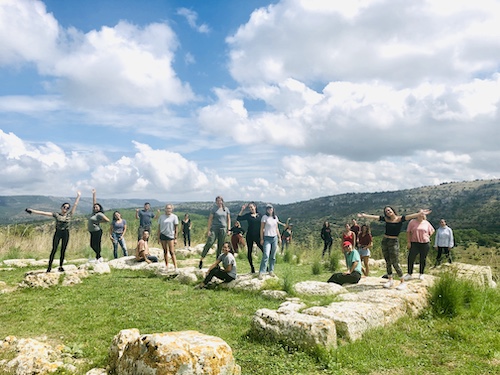
The largest island in the Mediterranean offers, in fact, a rich palette of diverse habitats and ecosystems: marine, coastal, inland and high-mountainous, including several volcanoes, such as Mt. Etna. The possibility to combine classes with practical activities in the field gives students the unique opportunity to directly observe and research the subjects of their studies.
Cultural Trips
THE PROGRAM INCLUDES VISITS TO
3 unesco world heritage site
+ A CULTURAL ACTIVITY AND SOCIAL EVENTS WEEKLY CALENDAR
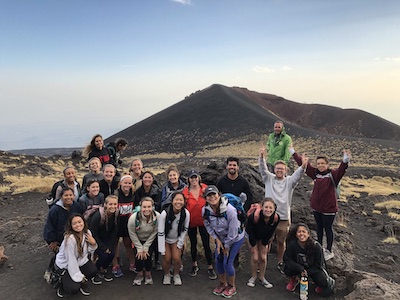
MT ETNA VOLCANO & TAORMINA TRIP
VALLEY OF THE TEMPLES TRIP
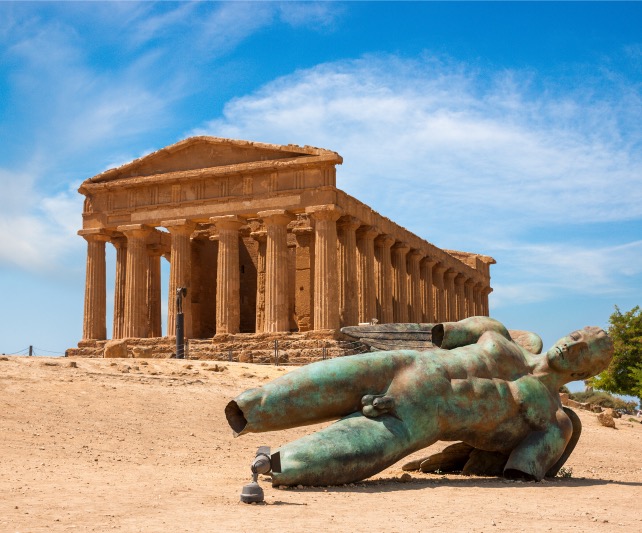
VALLEY OF THE TEMPLES TRIP
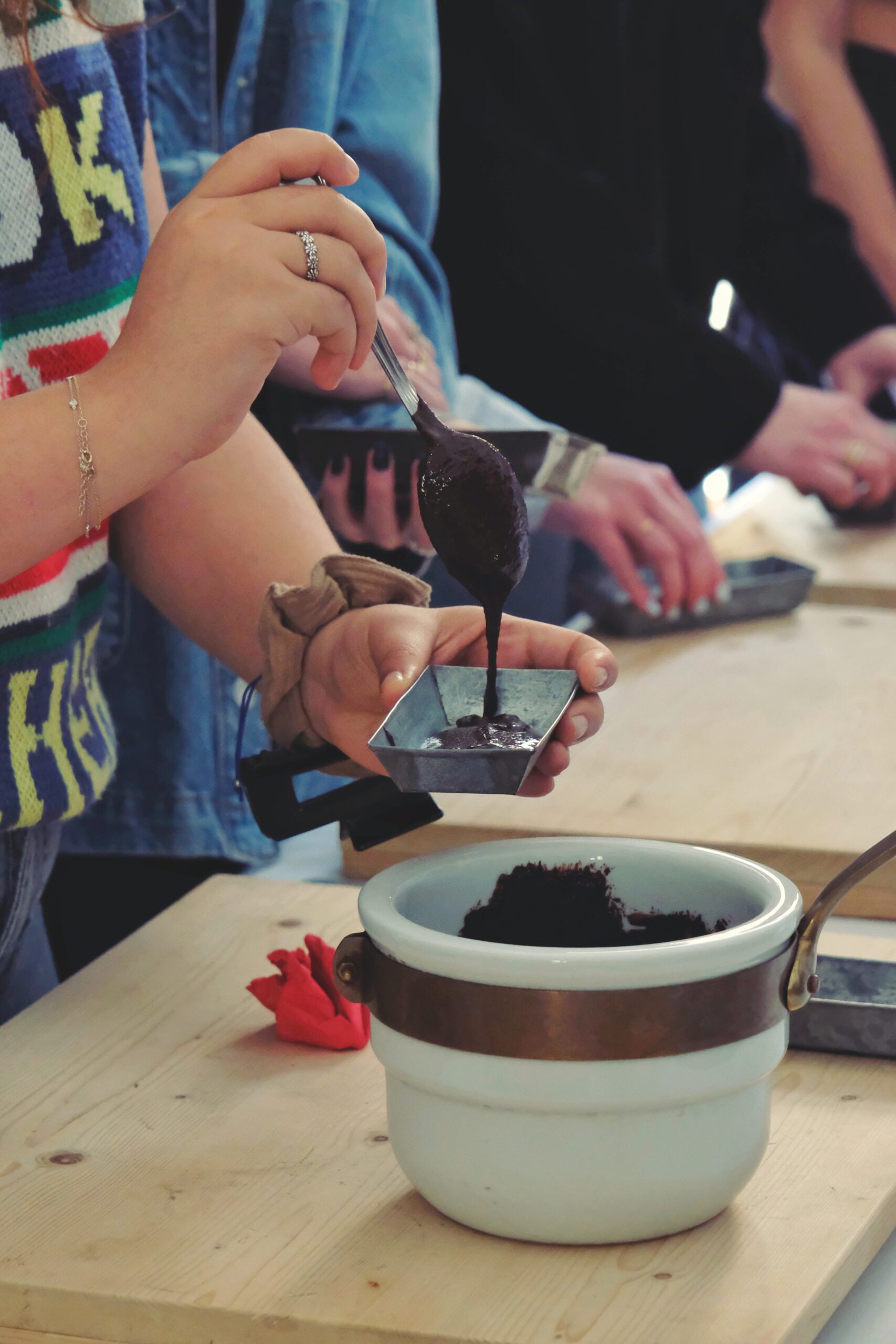
TRIP TO MODICA & CHOCOLATE-MAKING WORKSHOP
What our students say
How to apply
Apply by: April 24, 2026
Day(s)
:
Hour(s)
:
Minute(s)
:
Second(s)
NEXT PROGRAM START DATES
SPRING SEMESTER
14 weeks
22
January
SUMMER SESSIONS I/II
3/6 weeks
TBD
When should I apply?
Students are advised to apply as soon as possible to reserve their preferred courses and housing options: program housing is offered on a “first come, first served” basis.
Who can apply?
This program is intended for international undergraduate (bachelor degree) students currently enrolled in a university or college, as well as for recent graduates (within 12 months from graduation).
Students attending a graduate degree program (master’s students) may also apply for the program. Their application will be reviewed to ensure an appropriate fit with their academic and professional experience.
What are the application requirements?
Applications are open to all students currently enrolled in a university or college, as well as recent graduates (within 12 months of graduation).
Students are required to upload the following in the online application form:
- University transcript or certificate/statement of attendance: 2.5 GPA or higher
- Letter of motivation
- Passport (or ID for EU students)
- English language certificate: IELTS Academic = 6.5; TOEFL iBT = 79; Cambridge Scale = 180 (Upper B2); DET = 110; PTE Academic = 59. Exemptions apply for students from countries whose first language is English (see U of M list of English certificate exempt countries), students currently enrolled in an English-taught degree or who have completed an English-taught curriculum in high school.
Can I pay in installments?
Summer program fees (tuition, housing and service fees) are payable in 3 instalments:
- Application fee (€50): at the time of application
- 1st instalment (50% of program fees): within 7 days from the receipt of the letter of offer
- 2nd instalment (50% of program fees): 60 days before the program start date
Semester program fees (and summer program fees for students enrolled via the University of Minnesota):
- Application fee ($50): at the time of application
- Program deposit ($400): upon receipt of the letter of offer
- Outstanding program fees: in line with U of M payment deadlines
Do I need a visa? And if so, can you support me in the process?
You can find out more about whether you require a visa by filling out 4 questions on the official Italian government website. NB: Summer programs are “less than 90 days”, Semester programs are “more than 90 days”; reason for travel is “Study”.
By completing the application form you will be assigned a personal student advisor that will provide guidance each step of the way on matters such as visa applications, depending on your current status. The Letter of Enrollment and Proof of Accommodation issued by Syracuse Academy are generally attached to your visa application as supporting documentation.
Program Fees
To apply and reserve your place in the program, you should complete the online form and pay the Application Fee of €50.
Tuition Fees
Summer I: 3 weeks
June 13 - July 4 2026- ✔ Tuition for 1x course (selected among Summer I options): 3 US credits / 5 ECTS equivalent
- ✔ Seminars, Field Trips, Labs and On-site lectures with guest speakers and practitioners
- ✔ Student pack and learning materials
- ✔ Guided tours and cultural activities
- ✔ Excursions to 2 UNESCO sites: Mt. Etna volcano & Taormina Greek-Roman Theater, Modica’s baroque town with a traditional chocolate-making workshop.
- ✔ Academic support drop-in sessions and Project mentoring.
- ✔ Intercultural learning workshops & Survival Italian language sessions
- ✔ Syracuse Academy certificate and transcript.
- ✘ NOT INCLUDED IN FEE:
University of Minnesota Certificate and Transcript for US university credit transfer.
International Health Insurance
Summer III: 6 weeks
June 13 - July 25 2026- ✔ Tuition for 2x courses (selected among Summer I-II options): 6-7 US Credits / 10-12 ECTS equivalent
- ✔ Seminars, Field Trips, Labs and On-site lectures with guest speakers and practitioners
- ✔ Student pack and learning materials
- ✔ Guided tours and cultural activities
- ✔ Excursions to 3 UNESCO sites: Mt. Etna volcano & Taormina Greek-Roman Theater, Valley of the Temples, and Modica’s baroque center with a traditional chocolate-making workshop.
- ✔ Academic support drop-in sessions and Project mentoring.
- ✔ Intercultural learning workshops & Survival Italian language sessions
- ✔ Syracuse Academy certificate and transcript.
- ✘ NOT INCLUDED IN FEE:
University of Minnesota Certificate and Transcript for US university credit transfer.
International Health Insurance
Spring semester: 14 weeks
January 22 - April 30 2027- ✔ Tuition for 4-5x course (selected among Semester course options): 12-16 US Credits / 22-30 ECTS equivalent
- ✔ Seminars, Field Trips, Labs and On-site lectures with guest speakers and practitioners
- ✔ Student pack and learning materials
- ✔ Guided tours and cultural activities
- ✔ Excursions to 3 UNESCO sites: Mt. Etna volcano & Taormina Greek-Roman Theater, Valley of the Temples, and Modica’s baroque center with a traditional chocolate-making workshop.
- ✔ Academic support drop-in sessions and Project mentoring.
- ✔ Intercultural learning workshops & Survival Italian language sessions
- ✔ Syracuse Academy certificate and transcript
- ✔ INCLUDED IN FEE:
- University of Minnesota Certificate and Transcript for US university credit transfer.
- International health insurance
*NB: All students currently attending a US university or college will be enrolled via our academic partner institution, the University of Minnesota, to receive a U of M Transcript and Certificate upon completion of the program, allowing for US credit transfer to other US Higher Education Institutions. Students can benefit from enrollment in the U of M International Health Insurance provider and receive additional support services from the U of M Learning Abroad Center. All payments made to the University of Minnesota are in US Dollars ($); therefore, the fees below shown in Euro (€) may be subject to change due to exchange rates and U of M additional services. Students may request information to apply for Financial Aid via their home institution.
If you are a US university student, complete the online form for guidance from our student advisors on how to complete your program enrollment.
Student Housing and Services
Students may choose between self-catering shared apartments (double or single rooms). Studio apartments are also available upon request for students that are 23 or older by the start of the program.

SHARED APARTMENTS
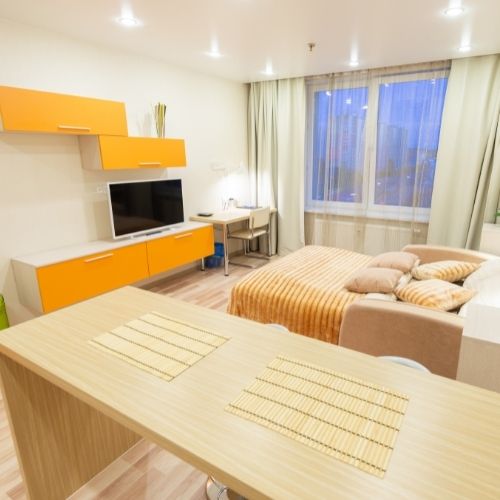
STUDIO APARTMENT
Housing & Services Fee
Summer (Sessions I, II and III)- Double Room in Student Residence with Self-Catering facilities and study areas, includes: utilities, wifi, maintenance service, bed linen and towels, kitchen equipment, washing machine
- (Optional) Single Room occupancy may be requested upon program application. Student opting for a single room option will be charged an additional supplement = €140 per week.
- Airport transfer and housing check-in.
- Welcome and farewell meals.
- Student Card for discounts at local sports and leisure clubs, shops and services
- 24/7 emergency assistance and on-site student consultant support.
- Social events calendar
- Volunteering with local NGOs opportunities facilitation.
Housing & Services Fee
Semester (Fall / Spring)- Double Room in Student Residence with Self-Catering facilities and study areas, includes: utilities, wifi, maintenance service, bed linen and towels, kitchen equipment, washing machine
- (Optional) Single Room occupancy may be requested upon program application. Student opting for a single room option will be charged an additional supplement = €140 per week.
- Airport transfer and housing check-in.
- Welcome and farewell meals.
- Student Card for discounts at local sports and leisure clubs, shops and services
- 24/7 emergency assistance and on-site student consultant support.
- Social events calendar
- Volunteering with local NGOs opportunities facilitation.