Syracuse, Sicily
crossroads of the mediterranean
the city
A stepping stone from East to West
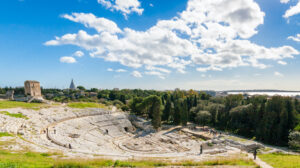
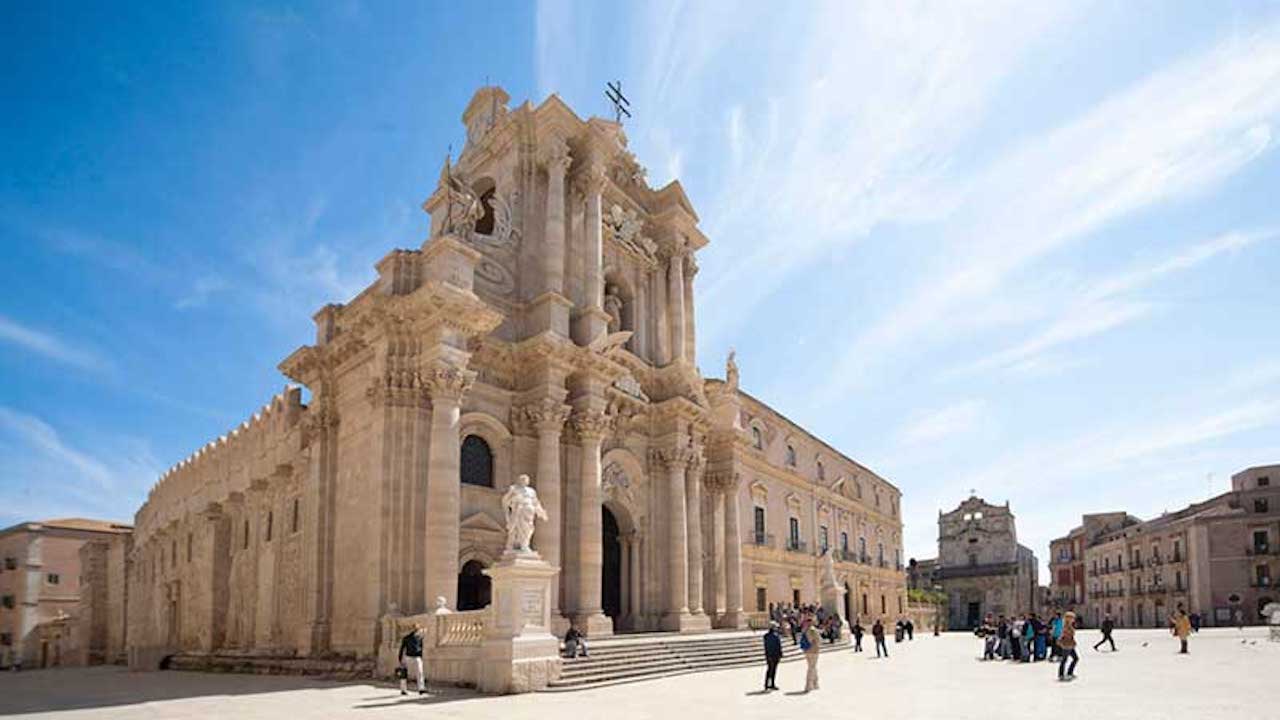
Syracuse was founded 2700 years ago by settlers from Greece, who seized the island of Ortygia and created a city that grew to be one of the richest and most powerful in the ancient world. Constantly redeveloped throughout its history, it now contains some of the most impressive and renowned buildings of the ancient, medieval and renaissance periods to be found in Italy, and has been awarded UNESCO World Heritage status. Rare among Italian cities, most of these past riches are on view in the heart of a thriving city. The wonderful ancient buildings are not hidden, but can be visited in just a few minutes’ walk around the city.
This architectural, historical and archaeological wealth is complemented by the Sicilian countryside. Within an hour’s drive are the stunning landscapes of Mount Etna, the Hyblaean hills, the Plemmirio and Vendicari marine wildlife parks. Each of these is the subject of study and protection by highly regarded research institutes with which we work closely. We make it possible to not just admire them from a distance: you get to work with the specialists themselves to discover what makes them so uniquely interesting, to encounter them through expert eyes.
from South to North
Syracuse is home to a thriving arts and design scene which is taking traditional images, symbols and materials of Sicily and casting them in new forms. Rediscovering inspiration from the past, or from the island’s natural beauty, these artists are forging a new identity that is distinctly Sicilian and are joyfully presenting it to the wider world. Major fashion chains are flocking here and international designers have found new influences and ideas. Modern businesses founded here have flourished abroad and are proud to introduce our students to the font of their success.
The history of Syracuse, this fertile hub of culture, has not been peaceful though. Unusually for the Mediterranean, nearly every major power has conquered or owned Syracuse at some point, and every major religion has made a base for itself here.
Paganism, Catholicism, Judaism and Islam can all be studied here in rare depth and detail with uniquely vivid on-site learning experiences of the highest calibre. The places of worship of many faiths can be seen together with the districts they lived in and the marks that their conflicts left on the city and island. Thanks to the unique archival resources of Sicily we can explore the crops they raised, and the food that they cooked.
A gateway to explore Mediterranean cultures
and societies
Organized crime has also left its mark on Sicily. The island has been presented for many years by national and international media outlets as the birthplace of this phenomenon. The Siracusa International Institute for Criminal Studies and Human Rights and our other partners, such as Libera Terra, offer unparalleled access to resources that allow our students to explore organized crime from an historical, legal and economic perspective. Through our strong relationships, we can arrange guest lectures and site visits that combine to create a unique, deep understanding.
This intimate appreciation can be replicated for another defining issue of current Mediterranean culture, migration. Syracuse has been one of the main landing ports for Middle Eastern and African migrants. It has absorbed many into its citizen body, and is the transit point for countless thousands more. Our access to the NGOs and governmental agencies based in Siracusa goes hand-in-hand with our long-standing links to the migrant communities themselves through our offering language classes and logistical support. We can bring to you the human side of this defining phenomenon. We don’t study it in clinical isolation: you will be a part of the reality, guided by leading experts in the field, trained to present the heart of the issue to students in a way that rejects shallow and disrespectful voyeurism or grief tourism, while helping them personally explore the reality, and come away with a deep understanding of one of the most important challenges to face our societies today.